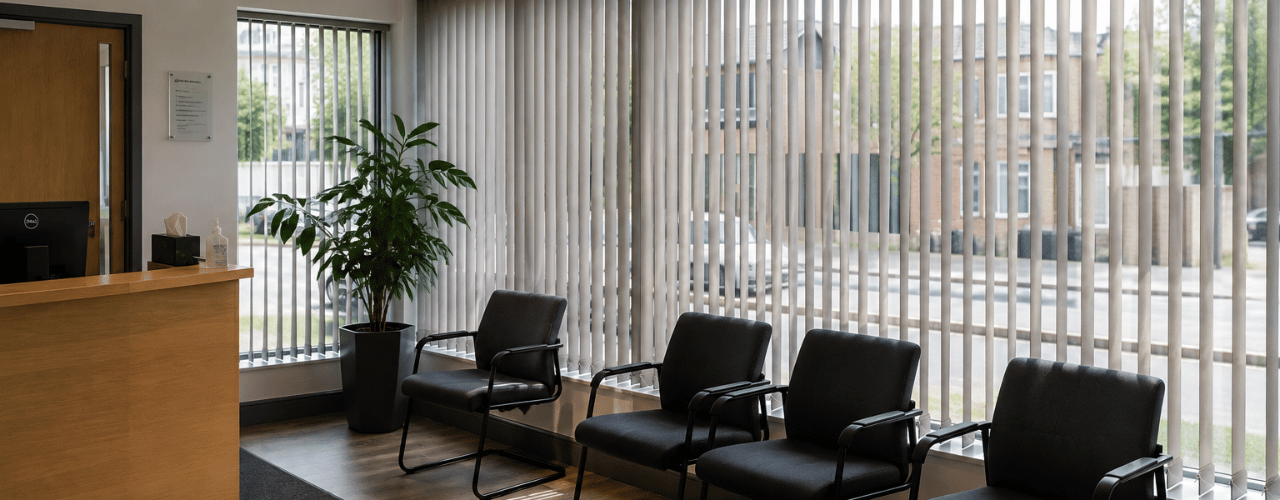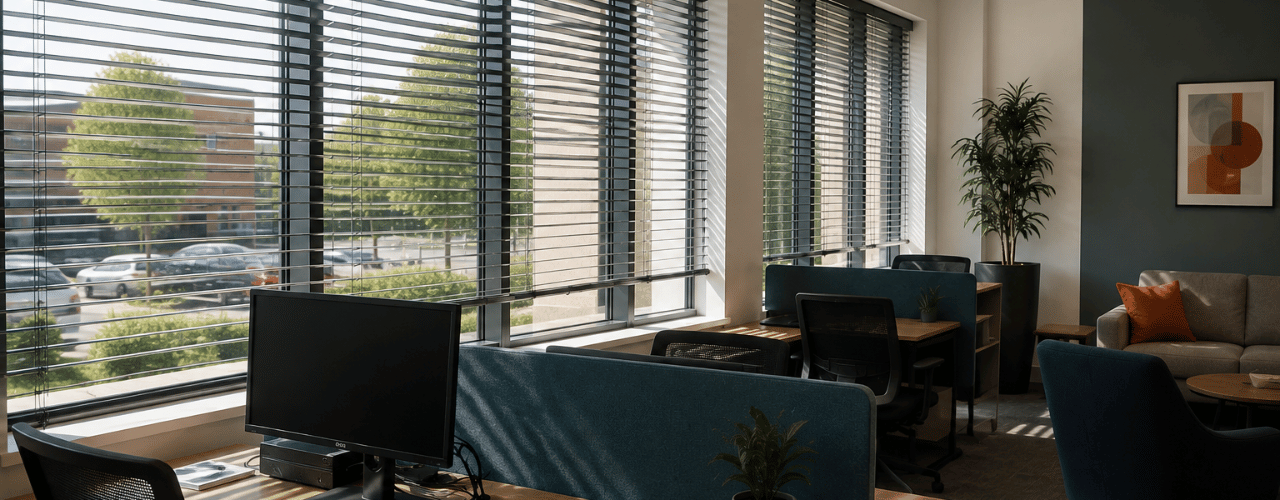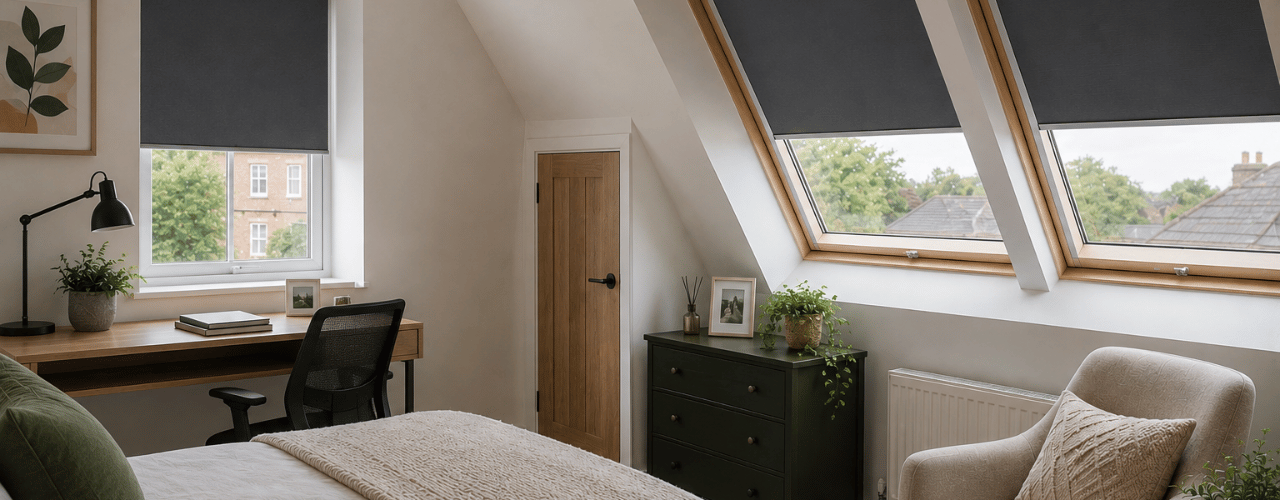

Direct solar heat gain sharply increases the internal temperature of glass-fronted commercial spaces during summer. Excessive solar glare on computer screens combined with poor thermal regulation directly reduces staff productivity and workplace comfort. Installing commercial thermal blinds provides a physical barrier that actively blocks solar radiation before it enters the building. Excell Blinds provides made-to-measure window treatments engineered for exact architectural fit and continuous thermal performance. These commercial hardware installations deliver measurable improvements in light control and ambient temperature regulation.
Why do office blinds matter for energy efficiency?
Office blinds matter for energy efficiency because they create a physical thermal barrier against solar radiation at the window level. This structural layer reflects external heat away from the glass, drastically reducing internal ambient temperatures. Installing performance fabrics ultimately decreases the electrical load required for commercial air conditioning systems.
Business owners frequently underestimate the volume of solar heat that transfers directly through exposed architectural glazing. Large panes of glass amplify solar transmission during peak summer hours, forcing mechanical cooling systems to operate continuously just to maintain baseline temperatures. Unfiltered sunlight entering the workspace wastes electricity while physically compromising monitor visibility. Commercial clients can select from extensive technical fabrics and operating mechanisms to address these precise thermal management requirements. Sourcing made-to-measure products guarantees businesses achieve high energy performance while maintaining exact control over external daytime visibility.
What types of office blinds control summer glare best?
The most effective office blinds for controlling summer glare are thermal roller systems and adjustable Venetian blinds. These commercial window coverings defect direct sunlight away from monitors while maintaining ambient natural daylight. Upgrading to these technical designs guarantees improved thermal regulation and reduced screen glare across corporate workspaces.
Different commercial zones experience varying degrees of solar exposure depending on the building orientation and available window dimensions. Facility managers typically specify heavy-duty blackout fabrics for south-facing presentation rooms where strict light suppression remains a priority. Alternatively, reception areas and individual offices often benefit from sleek cassette systems or adjustable louvres that prioritise external visibility alongside glare reduction. Excell Blinds conducts technical site surveys to evaluate your exact glazing layout and recommend the optimal shading mechanism. Our professional fitters install durable hardware designed specifically for repeated daily operation within busy corporate environments.
How do roller blinds reduce workplace heat build-up?
Roller blinds reduce workplace heat build-up by deploying a flat, unyielding technical fabric barrier against the windowpane. Manufactured with reflective solar backing properties, these materials actively bounce thermal radiation outside before it enters the room. This mechanism makes roller blinds highly effective for large, open-plan commercial spaces.
A precisely manufactured roller system leaves narrow edge clearances, preventing warm air from bypassing the fabric and entering the office interior. Facility teams simply lower the systems during peak solar hours to immediately stabilise the ambient room temperature. When retracted into their overhead cassettes, the hardware remains unobtrusive and maximises external light transmission during overcast afternoons. We supply these assemblies with heavy-duty chain mechanisms engineered to lift dense commercial-grade fabrics flawlessly. Replacing failing window treatments with reliable hardware helps staff limit manual handling and maintain their focus on daily operations.
Why are Venetian blinds ideal for custom light control?
Venetian blinds are ideal for custom light control because their horizontal aluminium slats pivot to redirect incoming solar angles. Tilting the louvres upward forces natural daylight across the ceiling while physically blocking direct screen glare. This specific adjustment keeps workspaces illuminated while effectively rejecting associated solar heat gain.
Aluminium slats provide exceptional durability and retain their physical shape even under continuous high-temperature exposure at the glass edge. These properties make them a highly cost-effective specification for multi-storey corporate buildings requiring visually consistent window finishing across multiple floors. The strict geometric profile of a Venetian installation integrates cleanly with contemporary corporate architectural designs. Our manufacturing process means building managers receive heavy-duty hardware built specifically to endure the daily demands of active commercial settings. The resulting installation delivers reliable light attenuation while presenting a highly professional aesthetic to visiting delegates.
Which fabric specifications work best for commercial spaces?
The best fabric performances for commercial spaces utilise high solar reflectance and low thermal transmittance specifications. These engineered materials aggressively reject solar heat while filtering the specific UV wavelengths responsible for monitor glare. Integrating technical fabrics directly maximises energy efficiency during the most intensive summer weather.
Selecting the correct fabric requires evaluating several physical metrics that govern how material interacts with raw solar radiation. We advise commercial clients to verify solar reflectance ratings, which quantify the exact percentage of thermal energy repelled by the covering. Property managers must also review UV filtration levels to protect internal architectural finishes from excessive fading. Dimout and total blackout materials provide strict thermal control for specialised zones like video conferencing suites and corporate projector rooms. Consulting an experienced UK supplier guarantees the final fabric specification complies strictly with commercial building regulations.
How do made-to-measure office blinds provide better insulation?
A made-to-measure fit ensures better insulation by eliminating perimeter gaps where thermal transfer typically occurs. Precision manufacturing guarantees the window covering spans the exact structural dimensions of the commercial window recess. This close tolerance traps solar radiation against the glazing before it impacts the internal room temperature.
Standard retail sizing frequently results in exposed borders that completely compromise the rated insulating properties of the technical fabric. Ambient heat naturally flows through the path of least resistance, bypassing the protective material and raising the temperature of air-conditioned rooms. Committing to exact physical dimensions remains the only proven method to secure genuine thermal efficiency inside commercial buildings. Excell Blinds surveys every specific window to manufacture hardware that precisely matches your architectural reveals. Securing this tight installation tolerance prevents ongoing thermal leakage and eliminates premature hardware replacement costs.
Common questions about energy-efficient office blinds
Facility managers frequently ask about the maintenance specifications and installation timelines associated with energy-efficient office blinds. Decision makers require exact operational details regarding long-term utility savings and structural disruption schedules before authorising workplace renovations. We have outlined these technical details to streamline your commercial procurement process.
How do office blinds help lower commercial cooling costs?
Office blinds lower commercial cooling costs by reducing the overall thermal load placed on existing HVAC systems. Physically blocking direct solar heat gain means the building consumes much less electricity to achieve baseline climate control. This passive technical strategy instantly produces measurable decreases in summer utility expenditure.
What maintenance do high-performance blind fabrics require?
High-performance blind fabrics require minimal maintenance to sustain their energy-efficient specifications over long commercial lifecycles. Routine dry dusting and occasional wiping with a damp cloth prevents particulate accumulation across the reflective solar backing. Commercial technical materials receive specific factory treatments to resist daily degradation and dust adhesion.
How long does professional blind installation take?
Professional blind installation typically takes under an hour per window, depending entirely on the structural complexity of the mounting brackets. Commercial fitting teams execute the hardware installation methodically to prevent disruption to active corporate operations. Managing the mechanical process efficiently lets staff continue their duties without structural distraction.
How You Can Upgrade Your Workplace with New Office Blinds Today
Upgrading your workplace starts with a professional site survey. This allows the exact dimensions of your commercial glazing to be recorded, so your office blinds can be made to fit properly and perform as expected.
The right blinds can help reduce glare, support temperature control and create a more comfortable working environment for your team. This is especially valuable during warmer months, when unmanaged solar gain can make offices uncomfortable and place extra demand on cooling systems.
Excell Blinds supplies and installs made-to-measure office blinds for commercial spaces, with fabric samples available during site visits to help you choose a finish that suits your interior. From survey to installation, our team can guide you through the process and recommend practical options for your building. To improve comfort, privacy and energy efficiency in your workplace, Contact Us today to book a technical site survey with Excell Blinds.