How to choose practical kitchen diner blinds for windows, dining areas and glazed doors
Are Faux Wood Venetian Blinds Best for an Open-Plan Kitchen Diner?
Faux wood Venetian blinds are a practical choice for the kitchen zone of an open-plan kitchen diner. Their moisture-resistant slats provide adjustable light and privacy, while the finish suits areas affected by general humidity and regular cleaning. They will not necessarily suit every window or door in the room. Choosing blinds for an open-plan kitchen diner by zone allows each opening to have the right material, fitting method and controls. A coordinated mix of made-to-measure blinds can meet those practical needs without losing a consistent finish.
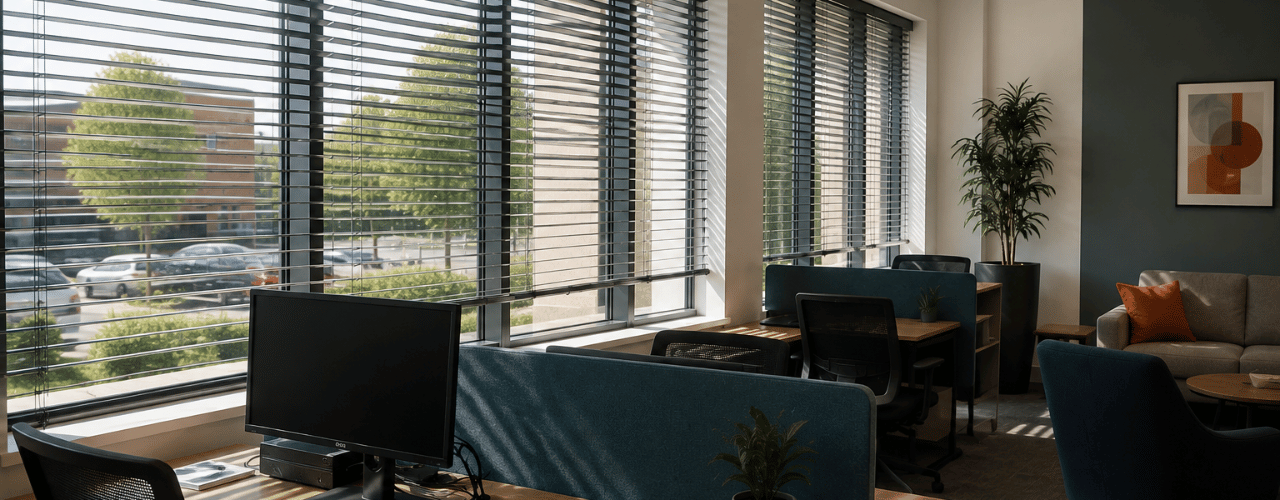
For moisture-prone kitchen windows, sensible starting points include faux wood Venetian blinds or aluminium Venetian blinds. Day and night blinds or roller blinds with a suitable light-filtering fabric can soften daylight in dining areas, while Venetian slats let you redirect it. Perfect Fit blinds may suit compatible glazed panels. Vertical blinds can cover wider openings when there is enough space for the slats to stack, while motorisation can help with high or obstructed windows.
During a free home appointment, one of our local advisers can bring catalogues and samples, measure the windows and doors, and explain which materials and fitting methods suit each opening. You will receive a clear quotation for the complete room, with time to consider the options before deciding. Arrange a home consultation.
Why Are Faux Wood Venetian Blinds Practical in the Kitchen Zone?
Faux wood Venetian blinds suit many kitchen windows exposed to general humidity and cooking residue. Their moisture-resistant slats tilt to control light and privacy. You can dust them regularly and wipe them carefully with a dry cloth when needed.
Is the Window Exposed to Humidity or Direct Splashing?
The blind’s exact position should guide the material choice. General humidity places different demands on a blind from repeated splashing behind a tap. Direct exposure increases cleaning and may make a fabric option less practical. Horizontal slats also collect dust, so they need regular attention.
Aluminium Venetian blinds also suit high-humidity areas. Tilting the slats gives direct control over light and privacy. Excessive pressure can bend the slats, so careful cleaning and handling matter.
A roller blind can give a simple fabric finish in a drier part of the room. The selected fabric’s care instructions help determine whether it suits a position near a sink. A fabric that works beside the dining table may become frustrating above a tap if splashes or cooking residue require frequent cleaning.
How Can You Reduce Glare Without Darkening the Whole Room?
Glare often affects one part of the glazing more strongly than the rest of the room. Low afternoon sun may strike the dining table or television through one pane while the rest of the room remains comfortable. Closing every blind can reduce the reflection, but it also cuts useful daylight. Controlling the problem opening first can reduce glare without darkening the whole room.
Day and night blinds use alternating sheer and opaque sections to adjust light and privacy while the blind stays lowered. They suit windows that need more control than a simple open-or-closed choice. They do not guarantee complete blackout because light can still enter around the edges of the blind.
Vertical blinds can cover a wide opening when a close-to-glass system does not suit the frame. Their slats rotate to control light and gather at one side when open. The slat stack needs enough space beside the door or wall. Otherwise, the open blind may narrow a busy route into the garden.
During a home consultation, you can show us where glare causes a problem, and we can explain the blinds that may provide suitable control without unnecessarily darkening the rest of the room.
What Blinds Work Best on Kitchen Bifold and French Doors?
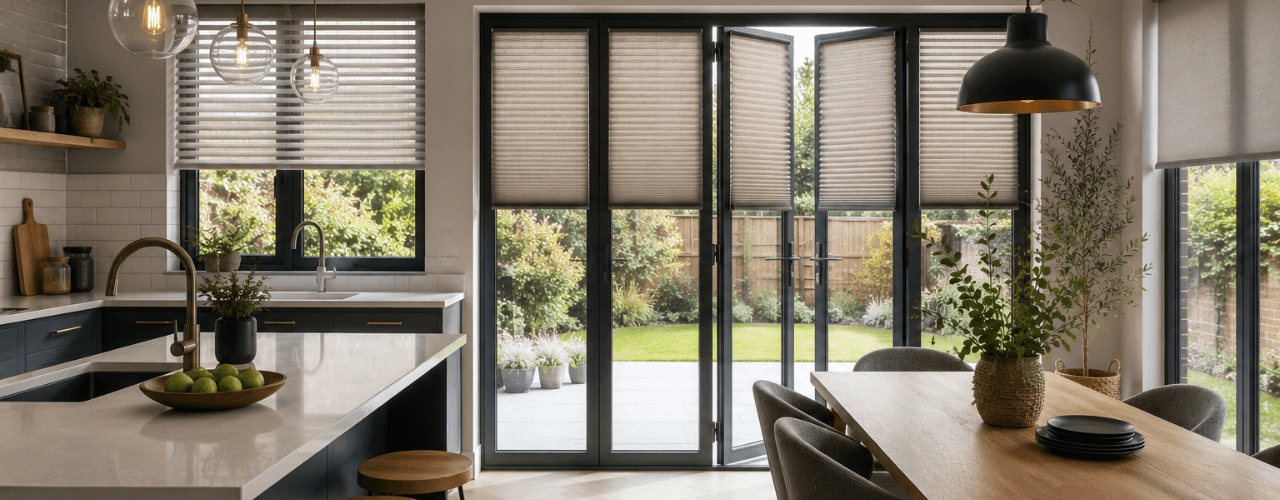
Perfect Fit blinds may suit compatible bifold and French doors because each blind sits close to one glazed panel and moves with it. This arrangement can help keep the main opening clear and lets you adjust separate panels for privacy or daylight.
The door style alone cannot confirm compatibility. The frame, the strip that holds the glass in place, handles and hinges all affect compatibility. The doors need to open fully, and bifold panels also need room to fold into their stacked position. The Perfect Fit frame can affect how tightly some bifold panels close. We can assess the available clearance before recommending a blind.
Unsure which blind will work with your doors? We can assess the frame and door movement before you order, then explain other options for bifold doors where Perfect Fit is not appropriate. Arrange a home consultation.
Do All Blinds in an Open-Plan Kitchen Diner Need to Match?
No. The best blinds for an open-plan kitchen diner do not need to match at every opening. Different windows and doors often need different products. Repeating a colour, slat tone or frame finish can connect the room, while each blind still responds to its local conditions. This keeps the room visually consistent without forcing an unsuitable blind onto a particular opening.
For example, a moisture-resistant Venetian blind could suit the kitchen window, while Perfect Fit blinds cover compatible doors. A roller or day and night blind can manage softer light in the dining area. Each blind meets a different practical need, while the repeated colour or finish connects the room.
Planning Motorised Blinds Around Access and Power
Motorised blinds help when manual controls sit out of comfortable reach. They may suit glazing above a worktop, high windows or rooms where you need to adjust several blinds regularly. They can remove the need to lean across furniture each time you adjust the blinds.
The motor, power source and control method need to work as one system. Each choice affects where the system can sit and how easily you can use and maintain it. Rechargeable motors work best where you can reach the batteries for charging. Hard-wired or solar-powered options may suit positions that are more difficult to access.
What Should You Check Before Measuring Kitchen Diner Blinds?
Before we take final measurements, we need to account for the recess depth, opening direction, handles, nearby fittings and the movement of any doors. These details determine where the blind can sit and whether you can operate it comfortably. Tile extending into the sides of the recess, taps and worktops can reduce usable space. Nearby furniture may also affect access to the controls.
A blind can match the width and height yet still fail in daily use. A shallow recess may not provide enough depth for the top mechanism. A handle can cross the path of the slats. A projecting tap can limit how far the blind lowers. Across a run of windows, the blinds also need to align consistently as a group.
You should be able to reach the controls without stretching across a sink or worktop. Where children use the room, we can explain suitable controls and any required safety devices during your consultation.
When Should You Measure Blinds During a Kitchen Renovation?
When choosing blinds for an open-plan kitchen diner as part of a renovation, it helps to discuss the likely blind type early, especially where large doors or motorisation may affect access and power options. We take final measurements when we can assess the completed openings and surrounding surfaces accurately. This helps you plan the right system early while ensuring the blinds are made for the finished space.
Planning Kitchen Diner Blinds with a Liverpool Specialist
If you are comparing made-to-measure blinds in Liverpool, we can assess the complete room during a free home appointment and explain where faux wood Venetian blinds may work and where another product may suit the opening better. We make our blinds to your measurements in our Liverpool-based factory, then our team of expert fitters installs them free of charge.
Our average lead time for blinds is 10-15 days from consultation to fitting. You will receive a clear quotation and have time to consider it without pressure. Arrange a home consultation or request a quote before ordering your kitchen-diner blinds.
Frequently Asked Questions
What blind is best above a kitchen sink?
Faux wood and aluminium Venetian blinds may suit a window above a kitchen sink because their slats resist moisture and can be cleaned more easily than many fabrics. The correct care method depends on the selected material. The distance from the tap and the window’s opening direction also affect suitability. The blind also needs enough room to operate without catching nearby fittings.
How should you clean faux wood Venetian blinds in a kitchen?
Regular dusting helps keep the slats clean, and a dry, soft cloth can remove marks when needed. The care guidance for the chosen finish sets out the correct cleaning method. Repeated direct splashing may make some positions unsuitable.
What affects the cost of blinds for an open-plan kitchen diner?
The number and size of openings affect the cost, along with the chosen material and fitting system. Motorisation adds another variable. A bifold door may need several individual blinds, so we need accurate measurements before we can provide a reliable quotation.
What happens during a home consultation?
During a free home appointment, your adviser will bring catalogues and samples, measure the windows and doors, discuss suitable products and provide a quotation. If you decide to proceed, we will make the blinds to your measurements in our Liverpool-based factory and arrange free professional fitting.